Benefits of Slow Feeding the DF54, DF64, CF64v and DF83
How Slow Feeding Works
(You may find you have to significantly dial in much finer)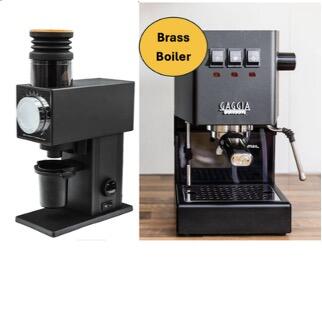
- Instead of dumping a full dose of beans into the grinder's hopper, you feed them in individually or in very small quantities.
- This slow, consistent flow prevents the "traffic jam" of beans, which can cause friction, heat, and the breakdown of particles into smaller fines. This can be further improved by slowing the speed if you have a variable speed grinder such as the CF64v.
- The goal is to allow beans to pass through the burrs one at a time, leading to a more consistent particle size distribution with fewer fines.
- The resulting particle size will be coarser than normal for a given setting, so you'll need to use a finer setting on your grinder to achieve desired extraction times.
Benefits of Slow Feeding
- Improved flavour: You get a more unimodal grind, leading to sweeter, more balanced, and generally more enjoyable coffee.
- Reduced fines: By minimising heat and friction, the coffee produces fewer fines, which are often associated with bitterness and over-extraction.
- More consistent particle size: The slow, individual feeding of beans results in a more even grind.
Practical Considerations
- This method is often applied to manual grinders by hand, but can also be simulated with electric grinders that have slow feed mechanisms, such as the DF grinders.
- Slow feeding significantly increases the time it takes to grind coffee, so it is best suited for situations where time is not a primary concern.
- As with any new grinding technique, you'll need to adjust your grinder settings to achieve the desired extraction time.